
Stretching is a simple yet powerful way to improve your overall health and wellness. Whether you want to increase flexibility, relieve muscle tension, or just feel more relaxed throughout your day, stretching at home is an accessible and effective solution. This beginner’s guide will walk you through the basics of stretching, how to prepare, and simple stretches you can start doing today.
Why Stretching Matters
Stretching regularly has many benefits, including:
– Improved flexibility and range of motion
– Reduced muscle stiffness and soreness
– Better posture and balance
– Enhanced circulation
– Stress reduction and relaxation
You don’t need fancy equipment or a lot of time to start reaping these benefits. A few minutes a day can make a big difference.
How to Prepare for Stretching at Home
Before you begin, a little preparation will help you get the most out of your stretching routine.
Find a Comfortable Space
Choose a quiet spot with enough room to move freely. A yoga mat or soft surface can add comfort.
Dress for Movement
Wear comfortable clothes that won’t restrict your range of motion.
Warm Up Briefly
Stretching cold muscles isn’t ideal. Warm up with 3 to 5 minutes of light activity like walking around your home, marching in place, or gentle arm swings.
Breathe Deeply
Focus on steady, deep breaths to support relaxation and help your muscles release tension.
Basic Stretching Guidelines
To stretch safely and effectively, keep these tips in mind:
– Hold each stretch for 15 to 30 seconds. This helps your muscles lengthen gradually.
– Avoid bouncing. Move into stretches slowly and hold steady to prevent injury.
– Stretch both sides evenly. Balance is key to preventing muscle imbalances.
– Listen to your body. Stretch to the point of mild tension, never sharp pain.
– Stretch regularly. Aim for at least 3 times per week for noticeable improvements.
Simple Beginner Stretches You Can Do at Home
Here are some easy stretches to start with. Remember to do them gently and focus on smooth breathing.
1. Neck Stretch
– Sit or stand tall.
– Slowly tilt your head toward your right shoulder until you feel a gentle stretch on the left side of your neck.
– Hold, then switch sides.
2. Shoulder Stretch
– Bring your right arm across your chest.
– Use your left hand to gently press your right arm closer to your chest.
– Hold, then switch arms.
3. Cat-Cow Stretch (Spine Mobility)
– Get on your hands and knees.
– Inhale and arch your back (cow), lifting your head and tailbone.
– Exhale and round your back (cat), tucking your chin and pelvis.
– Repeat slowly for 5-10 breaths.
4. Seated Forward Bend
– Sit on the floor with legs extended.
– Hinge forward at your hips, reaching your hands toward your feet.
– Keep your back as straight as possible.
– Hold and breathe.
5. Hamstring Stretch
– Lie on your back, one leg extended on the floor.
– Lift your other leg and hold behind your thigh.
– Gently straighten the knee until you feel a stretch along the back of your leg.
– Switch sides.
6. Hip Flexor Stretch
– Step your right foot forward into a lunge position.
– Lower your left knee to the floor.
– Push your hips slightly forward while keeping your torso upright.
– Hold and switch legs.
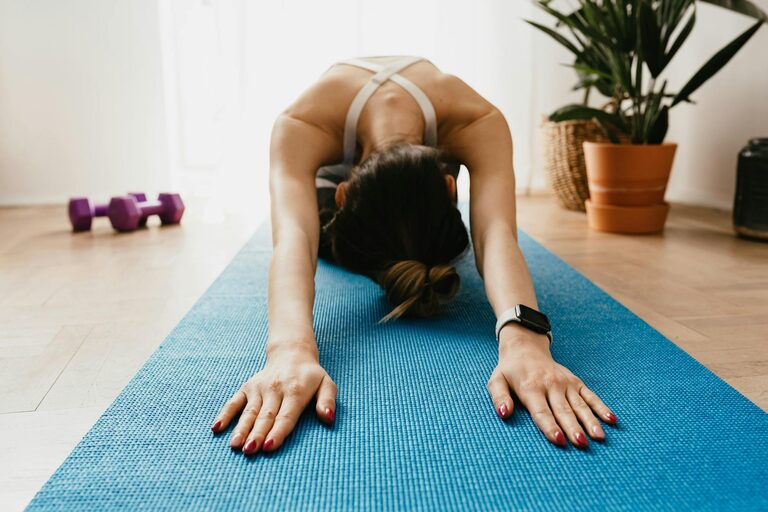
7. Child’s Pose
– Kneel on the floor, sit back on your heels.
– Extend your arms forward on the floor and lower your forehead.
– Relax and breathe deeply.
Tips to Stay Consistent
Making stretching part of your daily routine takes some commitment. Here are a few ideas to help you stay on track:
– Stretch first thing in the morning to wake up your body.
– Use stretching as a break during work-from-home hours.
– Pair it with another habit like watching TV or listening to music.
– Track your progress or set small goals, like holding stretches longer.
– Join online stretching classes or follow guided videos for variety.
When to Be Cautious
If you have any medical conditions, injuries, or concerns, it’s wise to check with a healthcare provider before starting a new stretching routine. Stretching should never cause sharp pain or discomfort. Proceed gently and adapt stretches as needed.
Final Thoughts
Stretching at home is an easy way to support your body’s health and flexibility. You don’t need special gear or hours of time—just a few simple moves each day can bring noticeable improvements. Start slow, listen to your body, and enjoy the increased comfort and freedom that come with better mobility.
Why not try your first stretching session today? Your body will thank you!